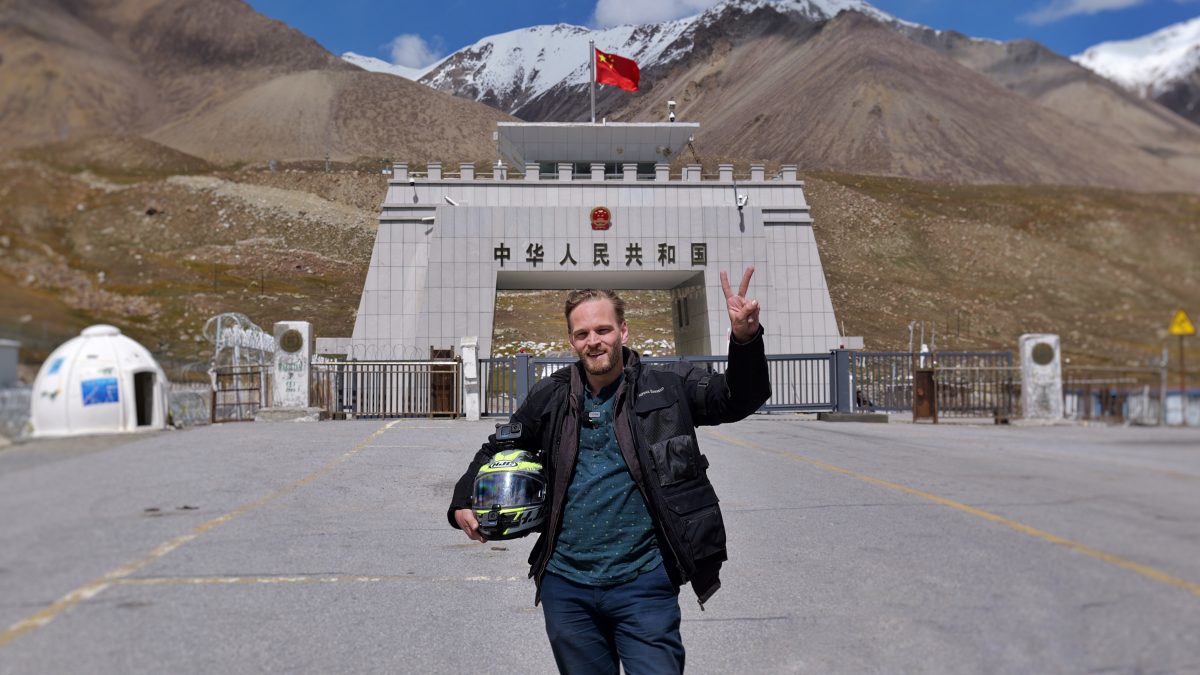
If you’re into motorcycle adventures that take you off the beaten path, I’ve got something for you. I hit the Karakoram Highway on a rented Suzuki GS 150, exploring Gilgit-Baltistan (referred to in India as Ladakh). This blog’s about that ride—real, raw, and ready for you to replicate. Let’s dive into where to go, what to see, and how to make it happen.


I’ll share all the must-visit locations I found along the way, some of which you’ll find in my 2 films that document my journey from Delhi to Khunjerab Pass.
Let’s dive into the itinerary and highlights of the Karakoram Highway, and then I’ll answer some frequently asked questions, such as how to rent a bike in Pakistan.

First, a warning on safety
I had two safety issues. In Naran, two people asked me to convert to Islam. The first kid was harmless.
But later that day, in Naran, a local butcher tried more forcefully to convert me!

My advice is to be cautious in remote areas of Pakistan and avoid being overly curious like me.
If someone does try to convert you, it’s best to say you don’t understand and politely leave.
Other travellers have told me they say they’re Muslim to avoid this altogether.
Secondly, religious protests forced me to rest in some towns longer than I wanted. So keep that in mind, as this area often has flare-ups where roads are blocked in protest.
I also got stuck on the side of the road while the Pakistan Prime Minister’s motorcade drove past.
Other than these things, I felt completely safe, and the locals were incredibly hospitable and always willing to help me. For example, the locals showed me how to get around the religious protests.
I’d just say that this route isn’t for the faint-hearted. You should be okay with dealing with protests and being able to innovate your way through issues like this. Or, don’t do this solo like I did, and travel with a local or someone more experienced.
7-day Karakoram Highway itinerary, incl. must-visit locations
I followed the map below in my travel film from Islamabad to Khunjerab Pass, and I’ll share all the must-visit places I found along the way.
There were many rest days in between as I explored each stop. So you should plan for this to take 14 days, followed by 2-3 days to return.
Day 1: Arrive in Islamabad


I travelled from Delhi, India, to Islamabad, Pakistan, to start my trip. Islamabad is one of the most beautiful cities in the world, so it’s a comfortable place to start your trip and rent a bike.

While in Islamabad, walk around the Jinnah Supermarket (a large market), try Afghan food at the New Kabul Restaurant, drink chai at the Quetta Chai Cafe, and visit the stunning Faisal Mosque.
Throughout your trip, you’ll find photographers at all the big tourist spots, like Faisal Mosque. Do use them to create memories of your trip! But just check the price per photo first. It should only be 50c or so. They will email them to you. Ensure you take down the photographer’s phone number in case something goes wrong.
Day 2: Islamabad to Abbottabad (134 km, 2 hours)

You don’t have to stop at the pretty mountainside town of Abbottabad; you can keep riding to Balakot. But it’s worth a stop!
It’s a fairly dull ride, but it’ll take you to the start of the Karakoram Highway at Hassan Abdal, and that intersection would be an excellent spot to click a picture.
It’s obviously most famous as the town where Osama Bin Laden was found, but it’s also a picturesque hill station with lots to do.
I personally wouldn’t visit the compound as it’s not rubble. But I know foreigners who have gone there to see what’s up.
But you can spend a day visiting these places:
- Shimla Hill Park offers breathtaking views and is often visited for its serene environment, which provides a peaceful retreat.
- Ilyasi Mosque is a unique mosque fed by a natural spring.
- Eat Pakora (fried vegetables) next to the Ilyasi Mosque.
- Try the best Samosas in Pakistan at the Bangladesh Samosa Centre.
- Take a ride on the Abbottabad chair lift. It’s quite a long ride through the mountains to a tea point. If you don’t like heights, definitely don’t do this though.
Day 3: Abbottabad to Balakot (62 km 2 hours)
Balakot is a sleepy mountain town with the raging Kunhar flowing through it. There’s not a lot to do here, but I always stop here to spend a night next to the river because the next day’s ride can be a bit long if you’re stopping a lot to explore and admire the beauty.
Just before you reach Balakot, you’ll find a lookout point across the valley to Balakot. It’s a great selfie point.
If you want to sleep beside the river, take one of the many hotels near the Ayub Bridge.
Do go for a walk around the main road and stop at Haji Gulzareen Chapli Kebab (hamburger patty with bread) and Kabuli Pulao (a special Afghani rice dish).

Day 4: Balakot to Naran (81 km, 3 hours)
Today is when you get into the natural mountain beauty, and I have a great breakfast point for you to stop at just 25 minutes outside of Balakot, Himalayan Healthy Foods.


Day Trip: The picturesque Saif-ul-Maluk Lake (9 km, 1 hour)

Take a day off in Naran and head to Saif-ul-Maluk, an alpine lake. The ride is challenging because the roads are horrible and turn into rubble. But the pain is worth it!


At the lake, you’ll find tea stalls, horse riding, boat rides, and many photographers to capture the moment.
After coming back down, you’ll probably want a shower to remove all the dust.
Then, head down the road to explore Naran’s main market and eat bread with chickpeas at Saif Ul Malik Hotel & Restaurant.


Day 5: Naran to Gilgit (233 km, 5 hours)
The next three days are mind-blowing, with lots to do, so take it slow, stop often, and soak in the spectacular atmosphere of Gilgit and the Hunza Valley.
Today, we cross the Police—and army-guarded border into Gilgit-Baltistan at Babasur Pass (4,173 m / 13,691 ft). You’ll need to stop and present your passports and visas.
Before climbing up Babusar Pass, stop at the famous Moon Restaurant for an epic breakfast of eggs, bread, and chai.
Stop at Babasur Top for a photo and to take in the panoramic views of the valleys on both sides. It’s incredible. Then enjoy some zip-lining and local snacks with chai.
Once you reach the bottom of the pass at Chilas, you must register at the Police checkpoint.
The other side of Babusar Pass
So far, you’ve seen lush green alpine beauty. Once you reach Chilas, you’ll enter the opposite: a rocky epic baron mad-max-like landscape.
That’s why this ride is so epic. You’ll see the extreme beauty of the world here.
The first point of interest is the magnificent Nanga Parbat (8,126 m / 26,660 ft) mountain. Known as the “Killer Mountain,” it has a fatality rate of around 20%, making it one of the most dangerous mountains to climb. At least 68 climbers have died, which underscores its treacherous climbing conditions and severe weather challenges. But you can safely view it from the Nanga Parbat viewpoint.

The next point is exciting, too. It’s the junction where three of the mightiest mountain ranges in the world meet! The Hindu Kush, Himalayan, and Karakoram ranges all meet at this point, and you can witness it for yourself! You’ll find a guide there who can explain it in more detail.
Gilgit City

Gilgit City, nestled in the valley where the Gilgit and Hunza rivers meet, is the capital of the Gilgit-Baltistan region. Amidst the towering peaks of the Karakoram and Himalayan ranges, it is a pivotal administrative centre and a significant hub for tourists exploring the northern areas.
Historically, Gilgit has been at the crossroads of various empires and cultures, reflected in its diverse population and rich cultural heritage.
Things to do in Gilgit City
City walk
Take a few days to relax in Gilgit and explore the bustling modern NLI Market, the clock tower at Gadi Bagh, and the old Kashmiri Bazaar nearby. You can enjoy this as a leisurely walk start at NLI market.
Try local food

For lunch, don’t miss the lightly spiced but flavourful chicken biryani at Aslam Biryani near NLI Market’s main gate. It’s located inside Dar Plaza, this region’s largest computer market.
If you want to try local food head to The Gilgit Food Yard and try dishes like Laghman and Mamto.
How to get a SIM card
For this region you’ll need a special sim card you can only get in Gilgit. A sim card from Islamabad or Lahore won’t work here.

Head to another point of interest, Helicopter Chowk, where you’ll find the remains of a captured Indian Army Helicopter. Nearby is the SCO office, where you can get a SIM Card.
Read my full article on how to get a SIM card.


Don’t plan on the internet being fast, stable, or even working! I didn’t have internet for most of my trip – even at the hotel! The Govt. had it turned off due to religious tensions in the area. So make sure you download your Maps offline before even getting to Gilgit.
Day 6: Gilgit to Gulmit (130 km, 3 hours)
The ride from Gilgit to Gulmit is a long and tiring one, but only because there are so many unique places to stop along the way! The road itself is lovely and well-signposted.
Be ready to be amazed. Here’s what you’ll see today.

Witness where two continents collide & the old Silk Road!
After leaving Gilgit, you’ll soon hit the Nagar Police Checkpoint. After that, you’ll find two very interesting points with English signboards. You must stop at both!
First is the collision point of continent plates.


Then a little bit further down the road is the old silk route viewpoint.


Breakfast at Mt. Rakaposhi viewpoint

About 20km into the ride, you’ll be stunned by Mt. Rakaposhi right in front of you! And the good news is there’s a perfect breakfast point further up the road. It’s the most beautiful place I’ve ever eaten!
Stop near Rakaposhi View Point Inn and Restaurant for fresh bread (paratha), chickpeas (chole), and milk tea (chai).


Tour of the 1000-years-old Ganish village
After you pass through the hillside and hilly town of Karimabad, don’t miss taking a tour of the historical Ganish settlement.
Attabad Lake viewpoint
Finally, after riding through some more incredible natural beauty, you’ll reach Attabad Lake, formed after a massive earthquake in 2012. The old Karakoram Highway is now underneath this lake!
Make sure you stop at the viewpoint just after the first tunnel. The colour of the water there is out of this world.


Next, stop at the stunning town of Gulmit before heading to Khunjerab Pass.
Day Trip: Passu Cones viewpoint, Hushe
Gulmit is so beautiful that you’ll want to spend 2 or 3 days there.
The Passu Cones, with their distinctive pointed peaks rising dramatically to 6,106 meters, are a breathtaking sight visible from Gulmit, a historic village, known for its picturesque setting amidst mountains, glaciers, and as a gateway to the stunning landscapes of the Hunza Valley.

On one of those days, take a short ride towards the Passu cones, and there’s plenty to do along the way:
- Visit the now-famous Yad Ghar “Memory House” chai corner and leave a note or rock behind with your name on it.
- Stop at the Passu Glacier viewpoint.
- Visit the Yak Grill restaurant to try Yak meat burgers and steaks.
- Take a chai break at the stunning Passu Cones viewpoint (be careful here if you go onto the nicely decorated bridge; they try to charge you a fee).


I would be wary of eating at the Chinese Xinjiang Restaurant as I suspect I got a stomach infection there. It wasted 5 days of my trip in bed.


Day 7: Gulmit to Khunjerab Pass – The Gateway to China (135 km, 3 hours)

Today, you’ll reach the end of the Karakoram Highway and travel up to a stunning high-altitude mountain pass.
Khunjerab Pass, at an elevation of 4,693 meters (15,397 feet), is the world’s highest paved international border crossing. It connects the Gilgit-Baltistan region with China’s Xinjiang Uyghur Autonomous Region, symbolizing the enduring partnership between the two countries through the Karakoram Highway.
The ride is about 3 hours, and the roads are great. During the ride you’ll have to stop twice and register yourself and your bike, so don’t forget your passport.
Entry to the Khunjerab National Park is $20 USD, which you can pay in Pakistani Rupees.
Along the way:
- Stop for breakfast at one of the many roadside restaurants in Sost.
- Look for photographers searching for snow leopards—they’ll happily show you what they’ve photographed!
- Reach the end of the Karakoram highway and explore the Khunjerab Pass checkpoint area.

Where to next?
Now, the ride back home begins! Or perhaps you want to head back to Gilgit and then to the other major valley with the region’s largest city – Skardu.
How to rent a motorcycle in Pakistan?
You can rent low-powered but capable motorcycles in Islamabad for as little as $10 a day.
I’ve already written a post on how to hire a bike and the cost.
Can Indians or NRIs travel to Gilgit-Baltistan?
While Indian nationals cannot visit this region, Indians with foreign passports can apply for a tourist visa from their country of residence.
But, warning! It can be a challenging experience for people of Indian origin, though!
The locals are lovely and incredibly hospitable and welcoming to Indians; there’s no issue there.
But you will be treated with suspicion by authorities—as per someone I know who went.
Only hardcore NRI travellers with little fear should attempt it.
However, non-disputed regions are less hassle for NRIs to travel to.
Accommodation options in Gilgit-Baltistan
Gilgit-Baltistan has various accommodation options, including camping, homestay, and traditional hotels. As a foreign solo traveller, you might even be invited into people’s homes to stay.
Throughout all my trips anywhere in the world, I use Booking.com to book all my accommodation.
Where can you get camping or trekking supplies in Hunza Valley?
Camping and hiking supplies are available second-hand or new in Aliabad and Karimabad, Hunza Valley.
If this post helped you, please leave a comment.

4 replies on “My Karakoram Highway Travel Super Guide (Safety, Must-Visit Stops, Itinerary, & More)”
Are you planning on travelling to Hunza?
Hey Sameer. I’ve been to Hunza. This blog post tells you all the places I stopped at.
Wonderfully informative travelogue, thank you. I’m planning to do the Pakistan Karakoram by bicycle with a friend. Do you think bringing camping gear is necessary? We’d prefer not to bring it to save on weight. I should note that we aren’t picky about quality of accommodation, so long as we have accommodation! What’s your feeling on that? Thanks for any advice.
Hey! Thanks. There are hotels and guest houses everywhere.