
Have you received a false copyright claim on Facebook that took down your video or stole your ad-revenue? You’re not alone. False copyright strikes on Facebook are a growing issue.
In this guide, I’ll walk you through how to dispute fake copyright claims on Facebook, protect your content, and prevent scammers from exploiting your hard work.
In a previous post, I covered how to deal with false YouTube claims.
How are false copyright claims used to steal revenue from creators?
The main problem I’ve found is fraudsters registering music they didn’t create with companies that have access to Facebook’s Copyright Management Tools.
In my case, a scammer had downloaded an instrumental track from the royalty-free music service Epidemic Sound, slowed it down slightly, and then registered ownership of it with Believe’s music aggregation service TuneCore.
I had used Epidemic Sound’s track in the following video, and even though I’d paid them for the license, the false copyright owner was able to copyright claim the video and steal the revenue.
What is stream fraud?
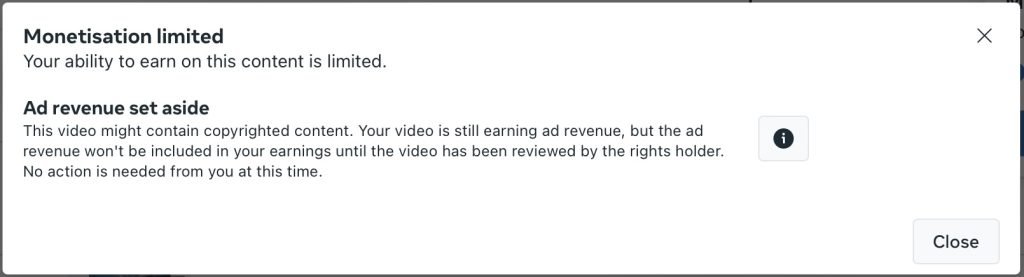
Ironically, the industry fighting stream fraud is also committing it – as you’ll see in this post.
But what is stream fraud?
Streaming fraud is a costly issue, with bad actors diluting the royalty pool and taking money out of the pockets of legitimate music creators.
Andreea Gleeson, CEO, TuneCore
Streaming abuse, encompassing bots, streaming click farms, and imposters, impacts all artists – both self-released and those signed to labels.
It affects the music industry by diluting the royalty pool, reducing revenue for legitimate streams, and slowing the approval and release process for creators.
Music Fights Fraud Alliance
So far, I’ve caught some of the biggest music distributors in the world committing stream fraud: DistroKid, Believe (TuneCore), Revelator, SonoSuite, and Zebralution.
How do you check for copyright claims on Facebook?
It actually took me nearly 1 year to find out that I had a copyright claim on the video because Facebook does not send you an email alert!
I hate to think how much streaming fraud is happening to content creators without their knowledge!
So make sure you frequently check your Facebook Support Inbox for new claims.
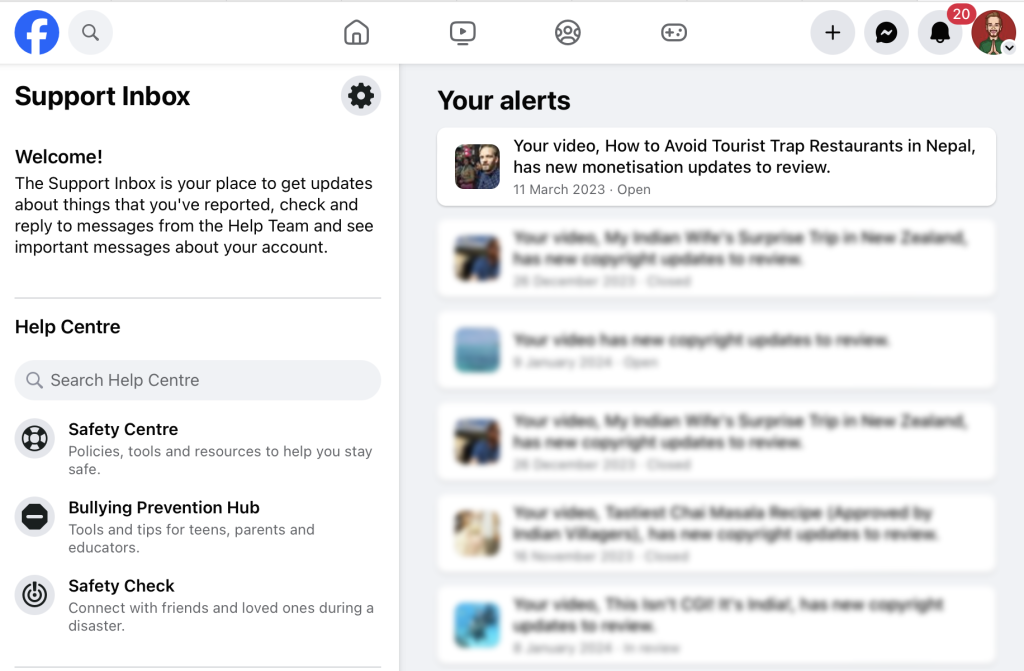
How to respond to false copyright claims on Facebook
If you’ve been sent a false copyright claim, the following is exactly what I did to resolve it.
Including what to do if the fraudster rejects your dispute – this happened to me.
First, check the song they’re claiming you have used
The copyright claim will tell you which song the fraudster is claiming you have used.
Look it up on YouTube, iTunes, or Spotify, and see if it’s the same song.
Sometimes, it’s a completely different track; sometimes, the fraudster has re-uploaded a track they didn’t create, or sometimes, it’s an artist singing over an instrumental track they’ve licensed.

In my case, the artist re-uploaded a song from Epidemic Sound and claimed it as their original work.
Here’s the original track I licensed:
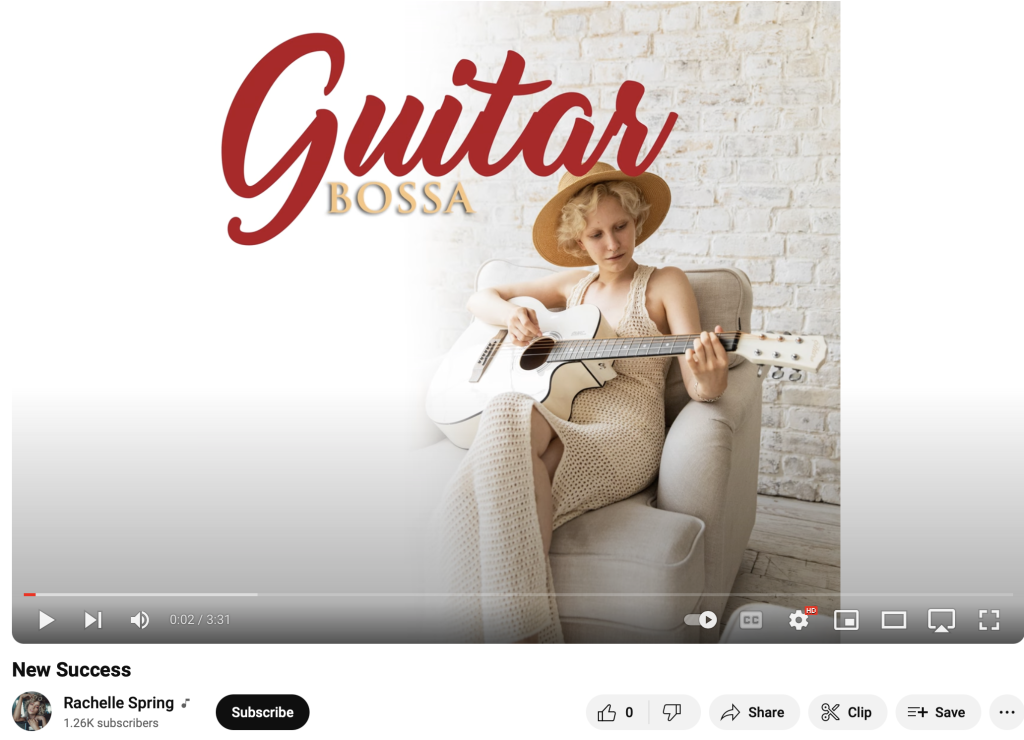
And below is the fraudster’s track that they’ve registered as their own.
Notice that the fraudster has downloaded the instrumental of Epidemic Sound’s song and slowed it down slightly! This is the trick they’ve used to register the song as their own.
How to file a copyright dispute
If you have licensed the music legally, then file a dispute immediately.
Here’s the information you need to include in your dispute:
- Where you have licensed the song from.
- The artist and title of the licensed song.
- A link to the licensed track.
- Why you believe this is a false copyright claim.
- Any additional evidence which proves their claim is false.
The following is an example dispute:
I have licensed this track from Epidemic Sound.
It’s called ‘Thinking About You’ by Sture Zetterberg and available at https://www.epidemicsound.com/track/wxgBcGHjBW/.
The artist you represent has re-uploaded this copyrighted work as their own. They have slowed it down slightly to avoid fraud detection.
Epidemic Sound is the sole owner of 100% of the rights of this track, and therefore no one has the right to claim their music.
Facebook copyright dispute example
Another reason for a dispute I’ve needed to use is, “Your artist has used a copyrighted track that they don’t own as a backing track in their song and uploaded it.”
Within 7 days, your dispute should be accepted.
If it’s rejected, we need to go directly to the music company, as I did in this case!
Note that I kept Epidemic Sound in the loop throughout the process. Always let them know if someone is abusing their content.
How to contact a copyright owner directly
Finding who to contact if your dispute is rejected can be challenging. Start by researching the song on Google and YouTube and try to find some copyright information. Also, look up the song on iTunes and find the copyright owner there.
Then, go to the copyright owner’s website and find their contact information.
Luckily, they included their email address, meta-copyright@believe.com, in the reason for rejection. So I knew it was Believe, a French music company run by Denis Ladegaillerie and Béatrice Dumurgier from France.
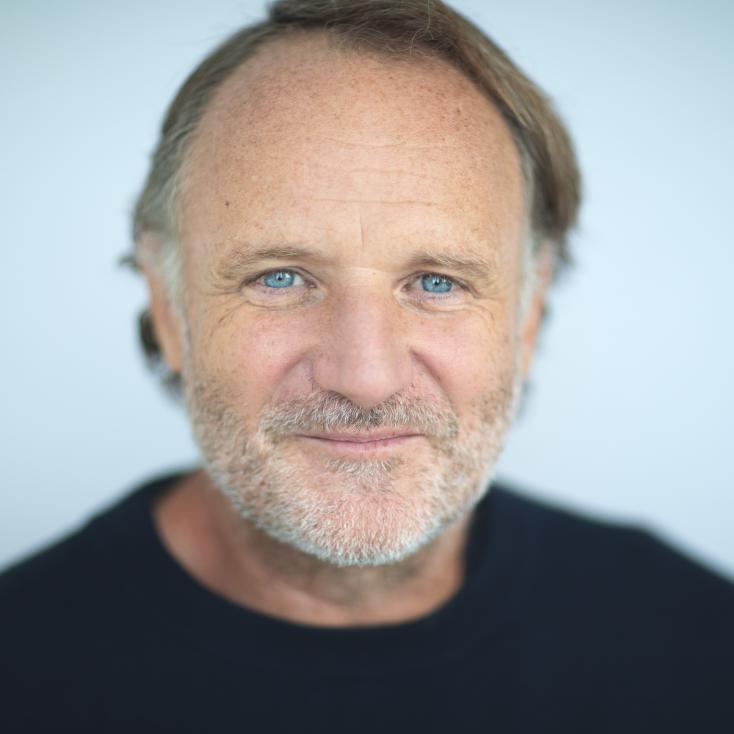
Founder & Chief Executive Officer, Believe

Chief Operating Officer, Believe
I’m not the only one to have problems with Believe Music. Jackie M over at Medium has a two–part series about dealing with their false claims.
Here’s the reason Believe Music gave for the copyright claim being rejected.
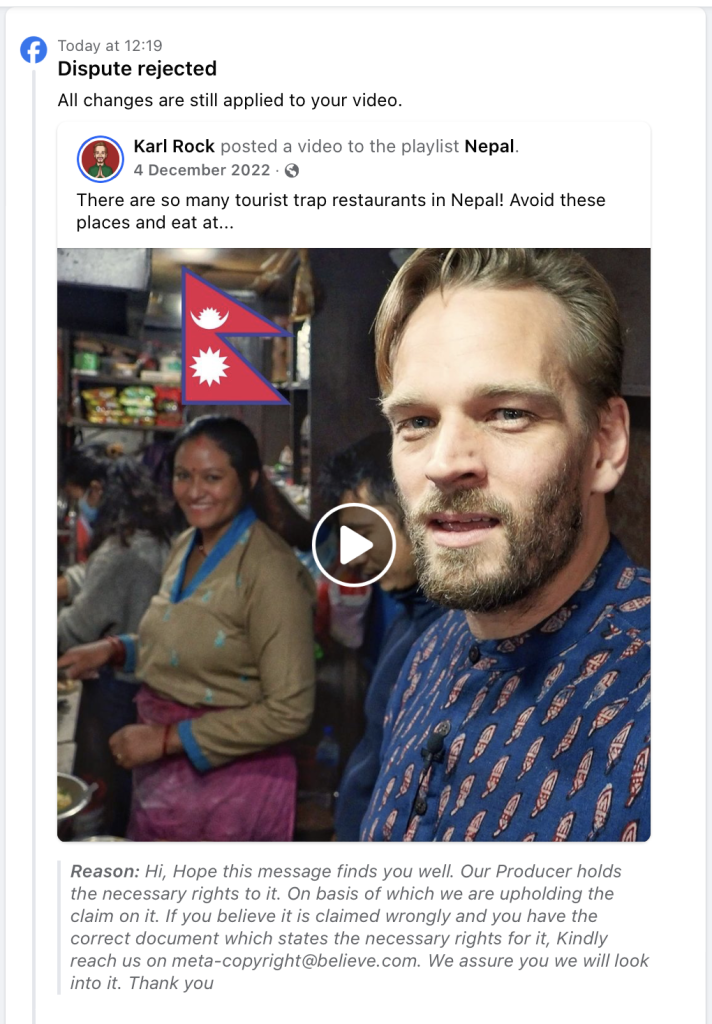
My next step was to contact the music company behind the false claim directly.
I started by looking up their CEO and COO and finding their emails on Google. Use an email verification service to check the emails are valid and deliverable.
I copied them into the message because their copyright team had already rejected my claim. They should know that their company is involved in fraudulent activities.
It’s important to copy in higher-ups because if the case eventually goes to court, you have evidence to show that you did all you could to resolve the issue before going to court or the Copyright Tribunal.
Here’s what I said in my email:
To: meta-copyright@believe.com,
denis.ladegaillerie@believedigital.com,
bdumurgier@gmail.comCc: copyright@epidemicsound.com
Dear Believe Copyright Team, CEO Denis Ladegaillerie, COO Béatrice Dumurgier.
On Copy: Epidemic Sound Copyright.I disputed a copyright claim on Facebook for the video below, and you have rejected it.
But I have definitely licensed this song from the correct copyright owner, and I’ll prove it below.
The video in question:
https://www.facebook.com/iamkarlrock/videos/1079799552688858
Timestamp: 03:51 – 04:23I have licensed this track from Epidemic Sound. They own 100% of the rights to this song.
The track is ‘Thinking About You (Instrumental Version)’ by Sture Zetterberg available at https://www.epidemicsound.com/track/wxgBcGHjBW/.
This song was released 3 years ago on 2020-10-25, and your artists’ track ‘New Success’ by Rachelle Spring, BNB, Maria Augusta, Dave Louis was only released 1 year ago on 2022-10-17.
Your artist has taken this instrumental track from Epidemic Sound and re-uploaded it as their own. They’re now stealing other peoples’ revenue on Facebook.
You have been stealing my revenue since filing the copyright claim on Saturday, 11 March 2023 at 02:33.
Please remove the copyright dispute, and return my revenue immediately.
Example email sent to a copyright owner to dispute a false Facebook copyright claim
Below is another example email I sent to the American digital music distribution service DistroKid after one of their artists used an instrumental track from Epidemic Sound and registered it as their own.


To: phil@distrokid.com,
philip.kaplan@distrokid.com,
philip@distrokid.com,
support@distrokid.com,
ea@negative.com,
legal@distrokid.comCc: copyright@epidemicsound.com
Dear DistroKid Copyright Team, CEO Philip Kaplan, COO Phil Bauer, Philip Kaplan Assistant, DistroKid Support
On Copy: Epidemic Sound Copyright.Your artist “Karen June Lawrence KJL” has taken an instrumental track from Epidemic Sound and registered it as their own work “Looking For A Beat (Reggaeton Single Remix)” and is claiming copyright on my video. I am not using your artist’s track.
I have disputed the copyright claim on Facebook for the video below, but it’s stuck “In Review.” Please review and release the claim as soon as possible.
I have licensed the original track “Head Under Water by Lvly feat. Coby Effect” https://www.epidemicsound.com/track/JSYgb9aRv8/ from Epidemic Sound. They own 100% of the rights to this song.
The video in question: https://www.facebook.com/iamkarlrock/videos/893363445588806/
Timestamp: 03:31 – 04:06I have attached the copyright claim.
Example email sent to a DistroKid to dispute a false Facebook copyright claim
Update: More stream fraud from DistroKid
Another DistroKid artist has issued a false copyright claim by releasing an Epidemic Sound song as their own. They’ve also tried inserting ads into my video to steal my Facebook in-stream revenue.
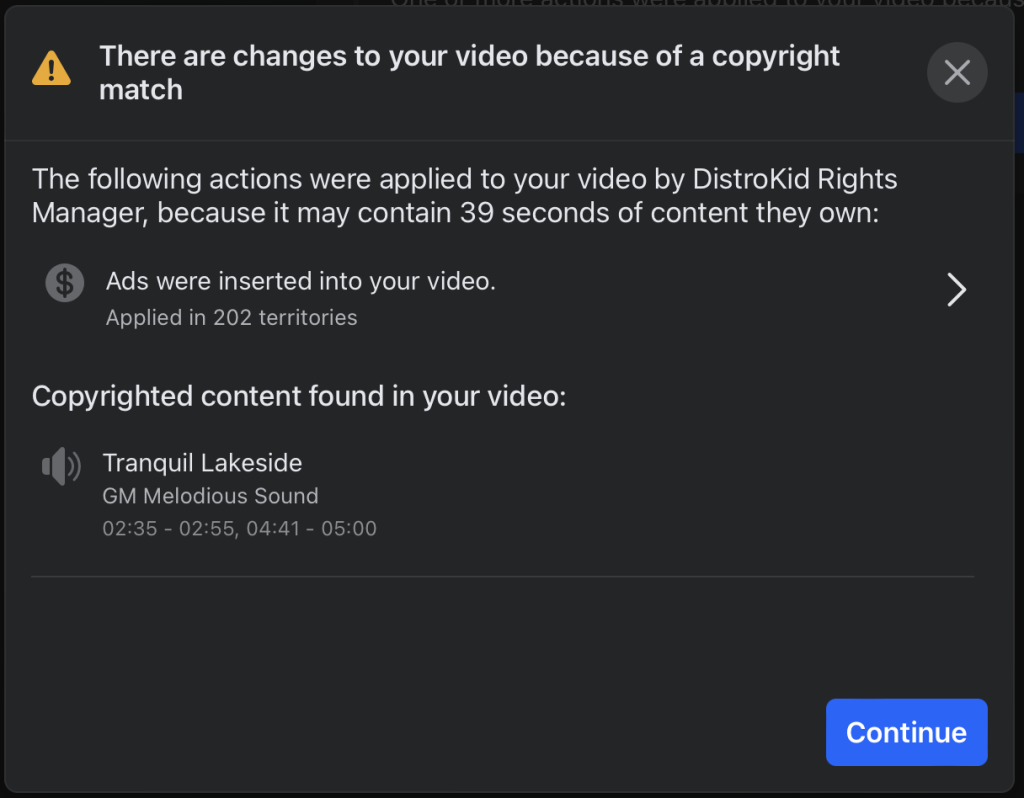
The claimed track “Tranquil Lakeside” was released on 2023-05-17, whereas Epidemic Sound’s original track “Shitty Train” by Of Men And Wolves feat. Las Lunas was released on 2022-09-30. It’s easy to see who released it first!
7 days later, after my dispute, DistroKid released the claim. But when the video was released publically on Facebook, they claimed the video again!
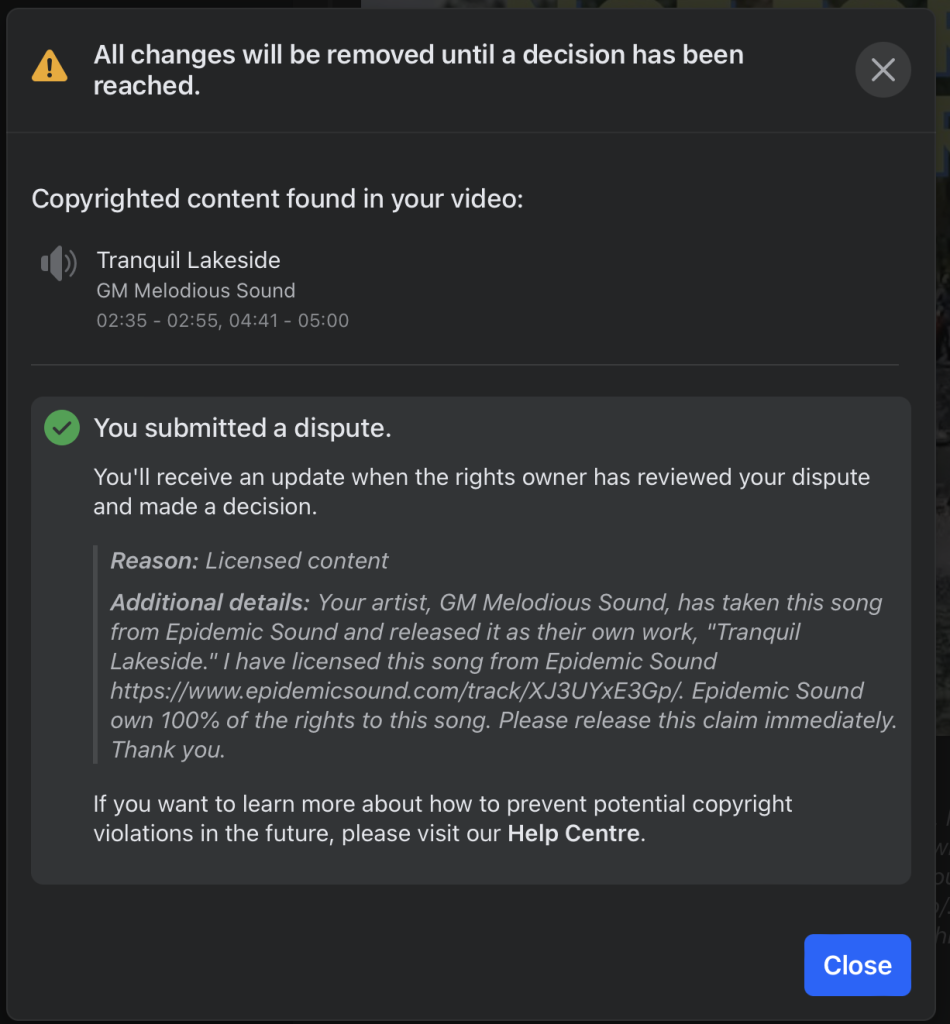
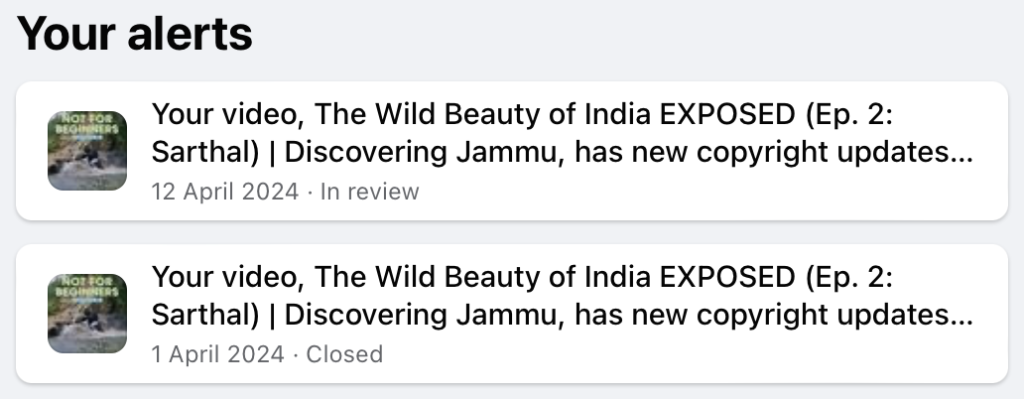
At this point, I was getting angry. There is so much streaming fraud from legitimate online music distributors! So, I started copying the media to my emails.
To: phil@distrokid.com,
philip.kaplan@distrokid.com,
philip@distrokid.com,
support@distrokid.com,
ea@negative.com,
legal@distrokid.comCc: copyright@epidemicsound.com,
enquiries@musicbizworldwide.com,
mail@musically.com,
news@digitalmusicnews.comDear DistroKid Copyright Team, CEO Philip Kaplan, COO Phil Bauer, Philip Kaplan Assistant, Support, Legal.
On Copy: Epidemic Sound Copyright, Music Biz Worldwide, Music Ally, Digital Music News.I’ve started copying in the music media because I’ve gotten sick of continuous streaming fraud on my videos by legitimate online music distributors.
Your artist, GM Melodious Sound, has taken a song from Epidemic Sound and released it as their own work, “Tranquil Lakeside.” They are fraudulently claiming copyright on my Facebook video.
You can listen to the fraudulent release here https://www.youtube.com/watch?v=RFfiSKkNDb0.
I have licensed the original song “Shitty Train” by Of Men And Wolves feat. Las Lunas, which was released on 2022-09-30 by Epidemic Sound https://www.epidemicsound.com/track/XJ3UYxE3Gp/. Epidemic Sound own 100% of the rights to this song.
My video in question: https://www.facebook.com/watch/?v=1579078086227392.
I have disputed the copyright claim on Facebook. Please review and release the claim as soon as possible.
DistroKid released a claim on the same video just last week. But the video has been claimed again for the same song.
I have attached the new copyright claim.
This is the third time I’ve encountered streaming fraud from DistroKid.
I’ve been collating the streaming fraud happening to my videos on my blog https://blog.karlrock.com/how-to-deal-with-false-copyright-claims-on-facebook/.
Example email sent to a DistroKid to dispute more false Facebook copyright claims
The streaming fraud never ends from DistroKid! Here’s another for Epidemic Sound’s track, “Eye on the Prize” by Nikki Gee.
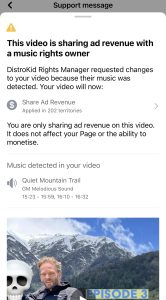
Raise awareness about copyright abuse by posting on social media
After contacting the copyright owner or music aggregator, make the copyright abuse public on whatever social media you have. Be sure to tag the company, their Founder, CEO, and Digital Rights Manager.
I posted this blog and then added it to the above email chain.
Dear All,
I’ve uploaded a blog post about Believe’s fraudulent and false copyright claim; you can read it here:
My follow up email to Believe and Epidemic Sound
https://blog.karlrock.com/how-to-deal-with-false-copyright-claims-on-facebook/.
Were the false copyright claims removed?
Yes! After 6-7 days, both Believe & DistroKid accepted the disputes.


Please post your struggles with copyright abusers in the comments.
Update 1: Even more false copyright claims!
Revelator, a “digital IP infrastructure” company run by Bruno Guez (Founder & CEO) and Jo Friedman (General Manager), has falsely claimed one of my videos on Facebook.

Here’s the thing, it’s not their music! Their artist, Aqualane, released the track Submarino on 28/10/2022. Whereas the track I used, Cloak by Christoffer Moe Ditlevsen, was released on 20/05/2020, and I’ve legally licensed from Epidemic Sound.
I’ve disputed the claim, laid a complaint via Revelator’s copyright infringement form, and emailed them directly at infringement@revelator.com and help@revelator.com.
The scary thing is that Facebook does not alert creators to copyright claims! So most creators won’t know that stream fraudsters are stealing their revenue. I now check the Facebook Support Inbox daily for false copyright claims.
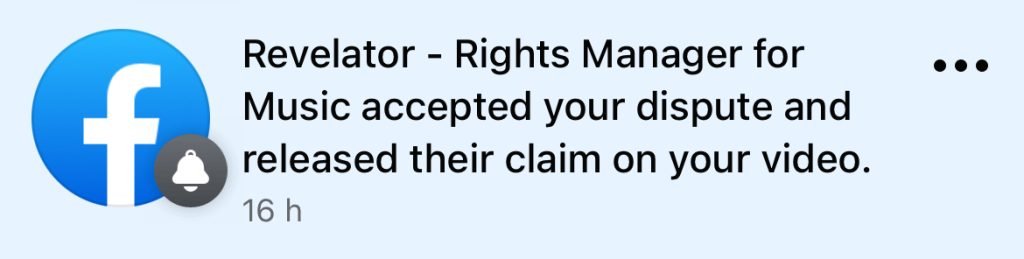
Update: After 7 days, my dispute was accepted, and I noticed that Facebook notifications showed an update about it. However, with the number of notifications I get, it’s easy to miss.
Update 2: I’ve informed Epidemic Sound about their streaming fraud problem
I’m continuing to receive false claims, and the copyright team at Epidemic Sound don’t seem to be doing much, so I decided it’s time to inform the Epidemic Sound management team.
What’s the point of licensing music from Epidemic Sound if they don’t protect their licenses and customers?
To: oscar@epidemicsound.com,
Sara.Borsvik@epidemicsound.comCc: stephen.setchell@epidemicsound.com,
filippa.lindman@epidemicsound.com,
Marcus.Lewold@epidemicsound.com,
Rikard.Herlitz@epidemicsound.com,
Lars.Torstensson@epidemicsound.com,
Jesper.Staffas@epidemicsound.com,
hello@epidemicsound.comDear Oscar Höglund and Sara Börsvik,
I’m an Epidemic Sound customer and YouTuber with nearly 1B views and 2.9M subscribers. I also used to work in anti-piracy for the music industry.
I’m writing to request your company do more about the following problem. I’m also considering making a video about this issue.
You have a massive streaming fraud issue on Facebook.
Fraudsters are downloading your songs and then re-releasing them as their own through distribution services like DistroKid and TuneCore. They then copyright-claim videos by creators like me who have legitimately licensed the track from you.
Here’s an example:
Your original song: https://youtu.be/2tmlEN6pToE.
Fraudsters release: https://youtu.be/lBhZzCZ6Y6o.This results in wasted time and stolen money from creators like me. Unlike YouTube, Facebook does not make it obvious that a fraudster has copyright-claimed music in a video. I imagine that many of your customers don’t even know that fraudsters are stealing their revenue.
It happens so often that I’ve started a blog post detailing all the streaming fraud I experience: https://blog.karlrock.com/how-to-deal-with-false-copyright-claims-on-facebook/.
I keep your copyright team in the loop when I’m disputing claims on Facebook, but they are not doing enough to prevent this. They should be sending DCMAs to DistroKid et al. so they can remove the infringing tracks from their catalogue to stop the fraud on that track.
What’s the point of licensing music from you if you don’t protect your licenses and your customers?
My email to the Epidemic Sound management team informing them about their streaming fraud problem.
To my surprise, Epidemic Sound replied! It was a very good reply, too. They know about the issue and have taken Facebook to court in 2022 to try to stop the problem. Unfortunately, legal action will take a long time, so we’ll have to wait for a judgement in the case.
From: lina@epidemicsound.com
Hi Karl,
Thank you so much for highlighting this issue. Let me first explain that we are aware of the issue and are as frustrated as you are with the current situation on Meta platforms (Facebook and Instagram).
In fact, after years of attempting to resolve the issue with Meta, we were forced to commence a lawsuit against Meta in 2022 to remedy the issue. (You can find more public information on the lawsuit here, due to these proceedings we can’t comment much more).
As your blog post so accurately details, and as is set forth in our complaint in the lawsuit, Meta is engaged in and is enabling widespread infringement of our music across their platforms, while depriving our artists and songwriters fair compensation for their copyrighted works, as well as limiting our clients, like yourself, the right to publish their rightfully licensed videos.
Since you have extensive knowledge of the complexities of copyrighted music on Meta’s platforms, allow me to get a bit technical in our explanation of this issue, and what we’re doing to prevent it.
It is common for platforms, like Meta’s, to have a rights management system in place to enable music rights holders to control the use of their music in UGC, clear licensed usage, and resolve ownership conflicts so that the rightful owner is controlling the song on the platform. From our standpoint, coming from more than a decade of experience in licensing music to creators, these types of systems are necessary to ensure that music can be used legally and be licensed to creators without issues.
Meta has such a system in place that it offers to its selected music “partners,” but despite our multiple attempts to obtain access to this system, while we communicate the widespread infringement, and the issues our customers are experiencing, they have refused to grant Epidemic access to their existing system.
In short, we are aware of the unauthorized distribution you reference. But, as detailed in the complaint, that problem appears compounded by the fact that Meta itself is engaged in infringement, has built tools that enable mass infringement, and has denied us access to the tools they offer to prevent this infringement.
We completely share your concerns. Please rest assured that, aside from the legal proceedings, we are actively working to prevent further infringement and streaming fraud.
As soon as we are informed by either one of our customers, or artist, of improper claims on or infringing versions of our music, we contact the distributor and request them to release all ownership claims in question or we send them a DMCA notice.
We are painfully aware that, under Meta’s current system, this is not enough and that is why we have commenced the lawsuit.
We appreciate you highlighting this problem to your community, if you have more questions or wish to discuss this matter further, we’re happy to get on a call and talk more.
The reply from Lina Melander, VP Platform Licensing & DRM, Epidemic Sound.
Update 3: Even more false copyright claims!
This time, SonoSuite, a Spanish digital music distributor founded by José Luis Zagazeta Vinatea and Maarten Van Wijck, has issued a false copyright claim on my first-ever full-length travel film!
Of course, the track was legally licensed from Epidemic Sound. SonoSuite’s artist slowed it down and reuploaded it as an original work.
I spent weeks of my time on this film, only to have them falsely strike it.
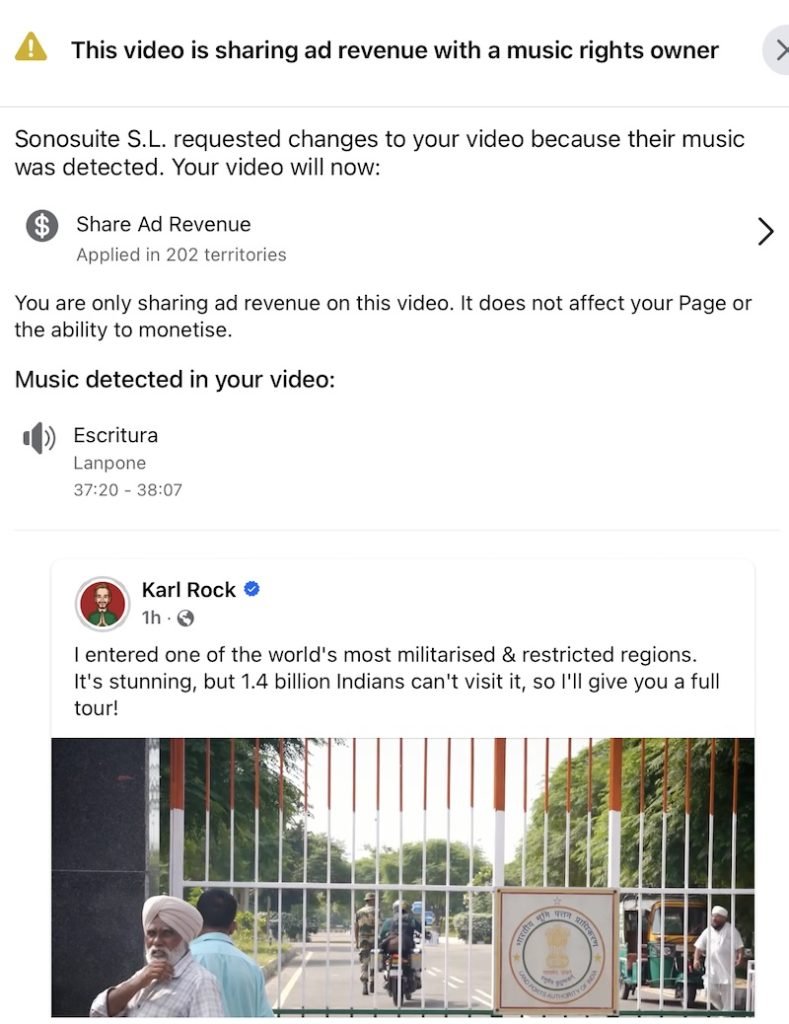
Update 4: The false copyright claims continue!
DistroKid is back at it again issuing a false copyright claim on the music legally licensed for my India & Pakistan travel documentary.
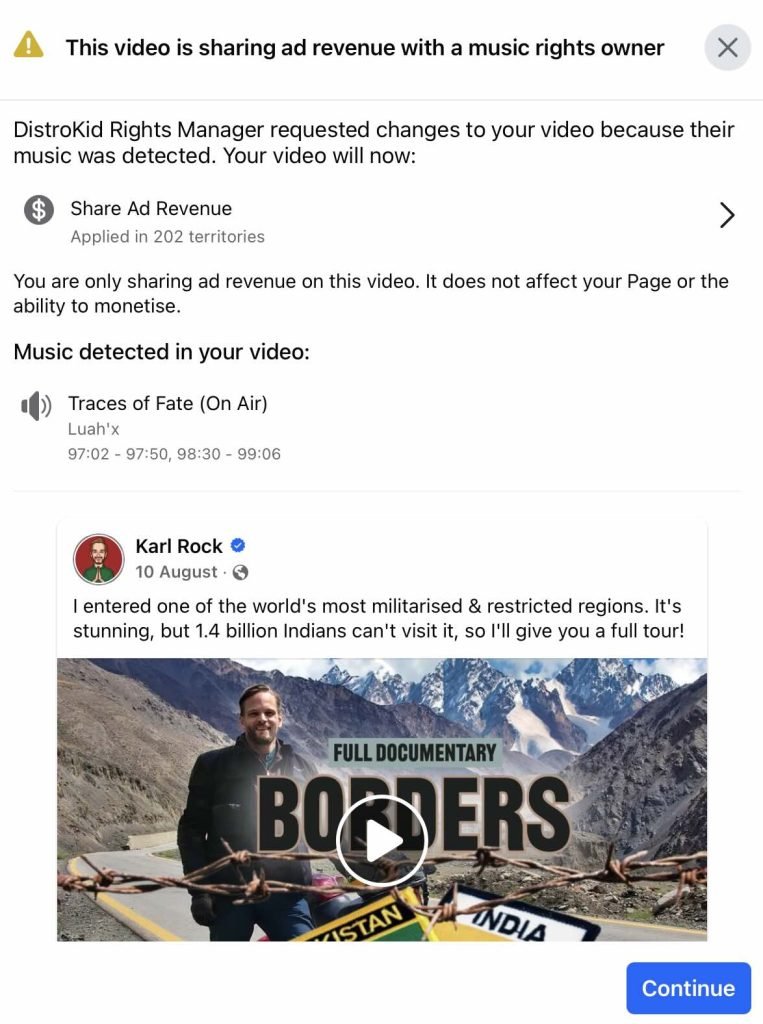
Please comment with your opinion on streaming fraud.

16 replies on “How to Deal with False Copyright Claims on Facebook”
Thanks for this post! I experienced something similar recently with a few of my videos.
Music that I had licenced from Epidemicsound was illegally used by someone else and then distributed by Distrokid. As a result, I received four copyright claims on Facebook.
When I searched for the artist on Youtube I realised that they’ve used the same music from Epidemic and just added some random vocals to it.
After coming across your blog, I did the following things:
1. DSITPUE SUBMISSION: Immediately submitted a Dispute to the claim on Facebook. In it, I mentioned the date of upload of my video, name of the music that I’ve licenced from Epidemic (with link) and mentioned the fact that their fraud artist who’s claiming rights on my video has stolen music form epidemic.
2. CONTACTING DISTROKID: In about a week, I drafted multiple emails to Distrokid on legal@distrokid.com and marked their management as well. This proved to be useless. No response from them yet.
3. CONTACTING EPIDEMIC: Almost immediately after submitting a Dispute, I reached out to the management at Epidemic. They’ve been quite forth coming in helping me with this issue. They advised that going forward if something like this happens again, I just need to submit a dispute and contact the support at EpidemicSound. They’ll help to resolve the issue by contacting the Music distribution company that has raised the claim.
In my understanding, if anyone is going through this issue the best approach is to submit a dispute ASAP and write to EpidemicSound. Epidemic will reach out to the claimant and help resolve the issue. If the claimant doesn’t close the case in 7 days, then on the seventh day the claim will by default be closed by Meta.
While this can be a super stressful time, it’s important to recognize that immediate action can help resolve it sooner. Just make sure to notify Epidemic whenever you get a claim of such sort.
Thanks for your very detailed comment. I’m glad you got it sorted.
Thank you for writing this. I got this email today with no information at all about how to dispute or even see the dispute in my inbox on fb. Thank you!
Today, I found scammer claimed our talking video with another language talking video and songs. Thanks for sharing.
Thanks for commenting. I hope you’re successful.
Thanks for sharing, I make content on facebook and in the last 5 days there is a WAVE of false copyright claims. Most of them are from Distrokid and some from FUGA, META must do something about it. In my case there is no song or audio, just gameplay with engine sound, I disputed and the case it is opened. Maybe they are taking our video audio and registering it on rights manager music on facebook, that’s my theory. If you are reading this right now, please leavy a reply with your experience.
I’m having the same problem. DistroKid and Zebralution GmbH are both claiming they own the music in my Facebook video but there is no music. I have no way of disputing the claim because I don’t have Rights Manager. This is also after Meta keeps prompting me to connect to my Instagram page, but whenever I try they say I can’t because my account is restricted, yet they don’t give any reasons why my account is restricted and I can’t dispute that. Meta is the worst.
Oh man, and here I thought it was just me. I use Bensound Music for my tracks on some of my (mostly timelapse) videos and each and every one gets a false copyright claim and my revenue from my videos has slowed down to trickle or is non existent on any of those videos. I dispute them each and every time and mostly (apart from one ) they release the copyright claim after about a week but by then the damage is already done as most people only watch them on the first or second day… I have reached out to Bensound as well and they are very pro-active and have even sent me the link to this blog post. They too say that they are aware of this issue and are trying to help but ultimately it is Meta who is responsible.
Thanks Rita! I’m happy to hear this post is making a difference out there. Best of luck.
This happened to me as well. Someone named Rebecca Lammers from a company called “Laika Network” has been submitting fraudulent copyright claims on one of my Facebook videos and got my entire profile demonetized… I initially submitted the dispute with a brief plain-language reply, because I didn’t think much of it. However, they rejected my dispute, despite my content being authorized use by default, because I selected the “add song” feature directly inside the Facebook app. Facebook pays licensing fees for creators to use the songs they offer, that’s the whole point of the “add music” feature. So I submitted a second dispute with more direct, legal terminology explaining that they are violating Federal Law, and that I will be seeking legal action for financial damages if they do not reinstate my video. Why are people so lame?
Thank you for sharing your story and the process of successfully disputing false copyright claims! I am a new creator and experiencing a flood of false copyright claims on Facebook from random accounts claiming rights on UMG licensed music. I’m happy to share with UMG for their artists’ music, but not fraudsters claiming rights.
The Epidemic Sound, AB v. Meta Platforms, Inc. Case slogs on, nearly three years after it was filed:
Date Filed # Docket Text
09/18/2025 Set/Reset Deadlines as to 317 MOTION FOR LEAVE TO REOPEN FACT DISCOVERY FOR THE LIMITED PURPOSE OF COMPELLING THE PRODUCTION AND LOGGING OF DOCUMENTS IMPROPERLY WITHHLED BY DEFENDANT META PLATFORMS, INC. AS SUBJECT TO “COMMON INTEREST PRIVILEGE” .
Motion Hearing set for 10/23/2025 at 10:00 a.m. in San Francisco, Courtroom 08, 19th Floor before Judge Jacqueline Scott Corley.
(ahm, COURT STAFF) (Filed on 9/18/2025) (Entered: 09/18/2025)
https://ecf.cand.uscourts.gov/cgi-bin/DktRpt.pl?14507877235779-L_1_0-1
I am also frustrated by having to dispute false claims with Facebook. Today (Sept. 26, 2025) for example, I responded to several apparently automated claims by The Orchard Management with this or a variation:
“Regarding actions taken and the purported Copyrighted content found, alleged to be represented by The Orchard Rights Manager:
“54” by Bryan Dodge at
01:04 – 01:19, 02:38 – 02:54, 04:08 – 04:23
An internet search finds NO musician by the name of “Bryan Dodge” with a song titled “54.”
Please identify and LINK TO the composer, performer, music publisher, specific song and copyright date for this alleged content, and the license details that The Orchard Rights Manager allegedly has with this artist or composer.
IN THIS CASE:
The song claimed is actually “Bright Future” (full) the first cut on the June, 1995 Music Bakery CD I acquired directly from the composer, Jack Waldenmaier Music Productions, which is ©1995 Jack Waldenmaier Music Productions/BMI
Licensing details are here, which state:
https://musicbakery.com/royalty-free-music-licensing.htm
100% Royalty-Free:
Licensed for use within your video and audio projects of all kinds — including websites, slideshows, games, apps, podcasts, event photography & videography, Facebook, YouTube, Google+ and anywhere else you need music.*
I have contacted Jack Waldenmaier and advised him of the claim involving his music.
META NOTE:
I suspect this is another fraudulent claim by “The Orchard Rights Manager,” which has previously tried to claim that a live performance by a US Navy Band during a live stream and replay of the 81st Pearl Harbor Commemoration in 2022 was actually three different performances by three different groups.
I note that several other of my streams with “Bright Future” from Jack Waldenmaier claim that “Bright Future” from Jack Waldenmaier is “66” by Bryan Dodge. HMMM.
META/FACEBOOK: Please REMOVE ANY AND ALL ACTIONS FROM THIS AND ANY OTHER OF MY VIDEOS where The Orchard Rights Manager has made claims.
FURTHER, prevent The Orchard Rights Manager from filing any future claims involving my videos, WITHOUT META/FACEBOOK first researching and confirming with the composer/actual rights holder that The Orchard Rights manager PROVABLY DOES HAVE representation of composer, performer, music publisher, specific song and copyright date for any alleged content, and the license details that The Orchard Rights Manager allegedly has with this artist or composer. ”
I have to wonder whether a RICO lawsuit under Federal or California law might be appropriate naming META and the various other parties that file claims.
Is there a pattern that fits?
“Pattern of racketeering: This requires at least two “predicate acts” (underlying crimes) within a 10-year period that are related and pose a threat of continued criminal activity. Common predicate acts include:
Mail and wire fraud
Bribery and extortion
Money laundering
Securities fraud
Criminal penalties: Conviction can result in up to 20 years in federal prison per count, or a life sentence if the predicate act was punishable by life in prison. The government can also force the forfeiture of all assets and profits gained from the criminal enterprise.
Civil lawsuits: Private citizens who suffer harm to their business or property due to a RICO violation can sue for treble damages (three times the amount of actual damages) and attorney’s fees. Recent examples of civil RICO cases in California include:
In 2025, Uber filed a federal RICO lawsuit in Los Angeles against law firms and a doctor for allegedly inflating personal injury claims.
In 2025, Ford Motor Company filed a civil RICO complaint in Los Angeles federal court against California law firms for allegedly inflated billing.
More here:
https://www.google.com/search?client=safari&rls=en&q=RICO+Lawsuits%2C+Federal%2C+California
I have the same issues with The Orchard Management and many other fraudulent accounts claiming ad revenue for copyrights when they clearly don’t own the copyright. Making claims on famous pieces of music that a simple google search shows who the legitimate rights owner is. I have contacted Meta customer support numerous times and I’m always told that the fraudulent accounts aren’t doing anything wrong and that I should contact the music company to file a report. Meta is complacent in this fraud. They refuse to address the fraudulent accounts who have access to Rights Manager. There are groups on Facebook with people selling accounts with Rights Manager access. Meta is letting it happen and creators and artists are the ones paying the price. How is it that Meta’s rights software can detect when a newly posted video uses an audio clip associated with a copyright, BUT can’t do the same with fraud accounts uploading songs and audio clips to Rights Manager?
The court handling Epidemic Sound, AB v. Meta Platforms, Inc. has made some decisions, but what happens is tied to another case, involving Cox Communications and Sony Music Entertainment:
Per AI summaries:
“The court’s statement means it will decide the case against Meta based on the information currently available but could change that decision later, depending on the outcome of a key copyright case currently before the Supreme Court, Cox Communications, Inc. v. Sony Music Entertainment.
This ruling affects the copyright infringement lawsuit filed by the music publishing company Eight Mile Style, which controls the catalog for the artist Eminem. The publisher alleges that Meta committed copyright infringement by allowing its users to post Eminem’s music on its platforms, including Facebook and Instagram, without proper licensing.
Here is a breakdown of the court’s statement:
“The court will proceed with summary judgment on all issues…”: A summary judgment is a ruling by a judge based on the facts and evidence presented, without a full trial. The court will review the arguments from Meta and the music catalog owner and issue a decision on the merits of the case based on existing law. This suggests the court believes the key issues can be resolved as a matter of law, rather than requiring a jury to decide on disputed facts.
“…subject to reconsideration, if appropriate…”: The court recognizes that its summary judgment could later be reversed or changed. A motion for reconsideration allows a party to ask the court to re-examine a ruling based on a clear error of law or new evidence.
“…after Cox is decided”: The court is waiting for the U.S. Supreme Court to issue its final decision in Cox Communications, Inc. v. Sony Music Entertainment. The Supreme Court’s ruling will clarify the standards for contributory copyright infringement, which is central to the lawsuit against Meta.
Significance of the Cox case
The outcome of Cox is crucial because it will define the extent of an internet service provider’s (ISP) liability for users’ copyright infringement. The Supreme Court will consider whether an ISP “materially contributes” to infringement by not terminating the internet access of users known to be repeat infringers.
How Cox affects the Meta lawsuit: The music publisher’s lawsuit against Meta alleges both direct and contributory infringement. The contributory infringement claim argues that Meta should be held liable for its users’ unlicensed use of music. The Supreme Court’s decision in the Cox case will establish a legal precedent that directly impacts the standard of liability for platforms like Meta. The outcome will determine if platforms must take specific actions to avoid liability for their users’ infringement.
The Sony precedent: A previous landmark case, Sony Corp. v. Universal City Studios, established that technology with “substantial non-infringing uses” is not liable for contributory infringement. However, subsequent cases like MGM v. Grokster focused more on a party’s intent to induce infringement. The Supreme Court’s Cox decision is expected to further refine and clarify this area of law for internet platforms.
Reade more here:
https://www.google.com/search?client=safari&rls=en&q=The+court+will+proceed+with+summary+judgment+on+all+issues%2C+subject+to+reconsideration%2C+if+appropriate%2C+after+Cox+is+decided.In+a+lawsuit+brought+by+the+owner+of+a+large+music+catalog+alleging+that+Meta+has+engaged+in+direct+and+contributory&ie=UTF-8&oe=UTF-8
Here’s a description of what is going on… using Sony-owned Orchard Rights Manager:
https://www.google.com/search?client=safari&rls=en&q=The+Orchard+Rights+Manager%2C+social+media+copyright+scam
An AI Dive produces:
“The Orchard Rights Manager scam is a widespread issue where the music distribution company, The Orchard, or entities claiming to represent them, issue illegitimate or fraudulent copyright claims on social media platforms, particularly YouTube. While The Orchard is a legitimate music distributor, many content creators accuse the company of exploiting automated copyright systems to claim revenue on content they do not own.
How the scam works
Abuse of automated systems: The Orchard has been accused of abusing YouTube’s Content ID system. Its clients, and possibly the company itself, upload music—including royalty-free, public domain, or even copyrighted tracks they do not own—and register them in the Content ID database.
False claims on content: Once registered, the automated system flags and issues copyright claims against any video that uses the flagged audio, regardless of whether the creator has the rights to use it or if the sound is entirely different. In some cases, the system has even flagged videos with silence or random ambient noises.
Monetization theft: When a false claim is made, The Orchard can monetize the creator’s video and collect the advertising revenue. If the creator does not dispute the claim, The Orchard continues to profit from their original content.
Targeting smaller creators: Many reports suggest that the scam disproportionately affects smaller creators who may not have the resources or legal knowledge to fight back against the claims.
Claim reinstatement: After a creator disputes a false claim, The Orchard is known to frequently reinstate the claim, forcing the creator to either give up the revenue or risk a copyright strike on their channel by taking the appeal further.
Why The Orchard is linked to the scam
Content creators have documented issues with The Orchard’s claims dating back years.
No response: Many creators report that the company is unresponsive to emails regarding disputes, leaving creators with no clear path to resolving the issue.
Inadequate internal processes: Critics allege that The Orchard’s manual review process is inadequate and that the company and its clients have taken advantage of this lax enforcement.
Automated vs. manual claims: While The Orchard maintains that false claims are an occasional error from automated systems, many users believe the systematic and unresponsiveness of the company amounts to intentional exploitation.
How to protect yourself
Use legitimate music sources: Always obtain music from trusted, legitimate sources. Even if a song is in the public domain, a specific recording may still be copyrighted, so use copyright-free or public domain archives.
Back up your work: If you create original audio, keep detailed records and project files to prove ownership if you are falsely accused of infringement.
Dispute false claims: If you receive a false copyright claim from The Orchard or any other entity, dispute it immediately. Provide as much evidence as possible, such as proof of licensing or project files demonstrating you own the content.
Escalate if necessary: If The Orchard denies your dispute, you can try to contact the company via social media, which may attract attention and motivate a response. You can also escalate the appeal through the platform’s official process. However, be aware that this can increase the risk of a channel strike if the platform sides with the claimant.
Use royalty-free services: Consider using a subscription-based royalty-free music service. The licensing agreements from these services often provide strong legal ground to contest fraudulent claims.
Hope this is helpful.